The Weed for Your Latte
Why Dandelion Is the Nutritional Reset Your Body Has Been Asking For
Informational purposes only. Always consult your healthcare provider before adding new supplements or herbs

Image of a dandelion seed bulb.
There's something quietly subversive about dandelions. The same plant that my husband has been weeding every spring from our garden turns out to be one of the most nutrient-dense things you could put in your body. We're talking Vitamin K levels that outperform spinach. Prebiotic fiber that feeds your gut microbiome. Iron that supports the blood you lose every month. Calcium that your bones are silently begging for.
And yet, we buy $18 green juices and skip right past them.
If you've been spending money at Erewhon on adaptogens and supergreens, dandelion (*Taraxacum officinale*) deserves a seat at that table — actually, it deserves the head of the table. Cultures across Europe, Asia, and the Americas have been using it medicinally for centuries. Modern research is starting to catch up. Here's everything you need to know.
What Dandelion Actually Is (And Why the Whole Plant Counts)
Dandelion isn't one thing — it's three. The leaves, the root, and the flower each deliver a distinct nutritional and therapeutic profile, which is why it's worth thinking about how you're consuming it.
The leaves are where the majority of the vitamins and minerals live. Raw dandelion greens contain vitamins A, C, and K, along with calcium, iron, potassium, and magnesium. One registered dietitian at the Cleveland Clinic described dandelion greens as likely "the most nutritionally dense green you can eat — outstripping even kale or spinach." That's not wellness hyperbole; that is a credentialed professional assessing dandelion’s micronutrient density.
The root is where the prebiotic and liver-supportive properties are concentrated. It contains inulin, a soluble fiber that feeds beneficial gut bacteria and has been shown to support the absorption of calcium and magnesium — both critical minerals for women across every stage of life. Dandelion root tea also has a stronger detoxifying action on the liver than the leaves, according to integrative nutrition practitioners, and is linked to improved skin clarity when the liver is functioning optimally.
The flowers are something of a sleeper. The aerial parts of dandelion, especially the flowers, contain approximately 115 times the polyphenol content found in the roots — a significantly higher antioxidant concentration than most people realize.
Vitamin K: The Bone Mineral Nobody Talks About Enough
Let's start with the nutrient where dandelion is genuinely, objectively exceptional.
Dandelion is one of the richest herbal sources of Vitamin K in existence, providing roughly 650% of the daily recommended intake per 100 grams. One cup of raw dandelion greens alone delivers more than 500% of daily Vitamin K needs.
Why does this matter specifically for women?
Vitamin K activates osteocalcin, a protein required for bone mineralization. It directly supports osteoblastic activity — meaning it helps build bone. Research has consistently linked lower Vitamin K intake to increased fracture risk and reduced bone density. A 2020 study found that higher intake of Vitamin K-rich leafy greens was associated with lower blood levels of uncarboxylated osteocalcin, a marker of better bone metabolism.
Women begin losing bone density in their 30s, well before menopause. Getting adequate Vitamin K in your 20s and 30s matters. Dandelion makes that easy.
Beyond Vitamin K, dandelion contains calcium, magnesium, phosphorus, manganese, potassium, and zinc — a mineral stack that supports bone structure and remodeling from multiple angles simultaneously. Dandelions also have an alkalizing effect on the body, which helps counteract acidic dietary patterns that leach minerals from bone.
References: Healthline — Nutrition-and-You — Food4HealthyBones
Iron and the Monthly Depletion Nobody Accounts For
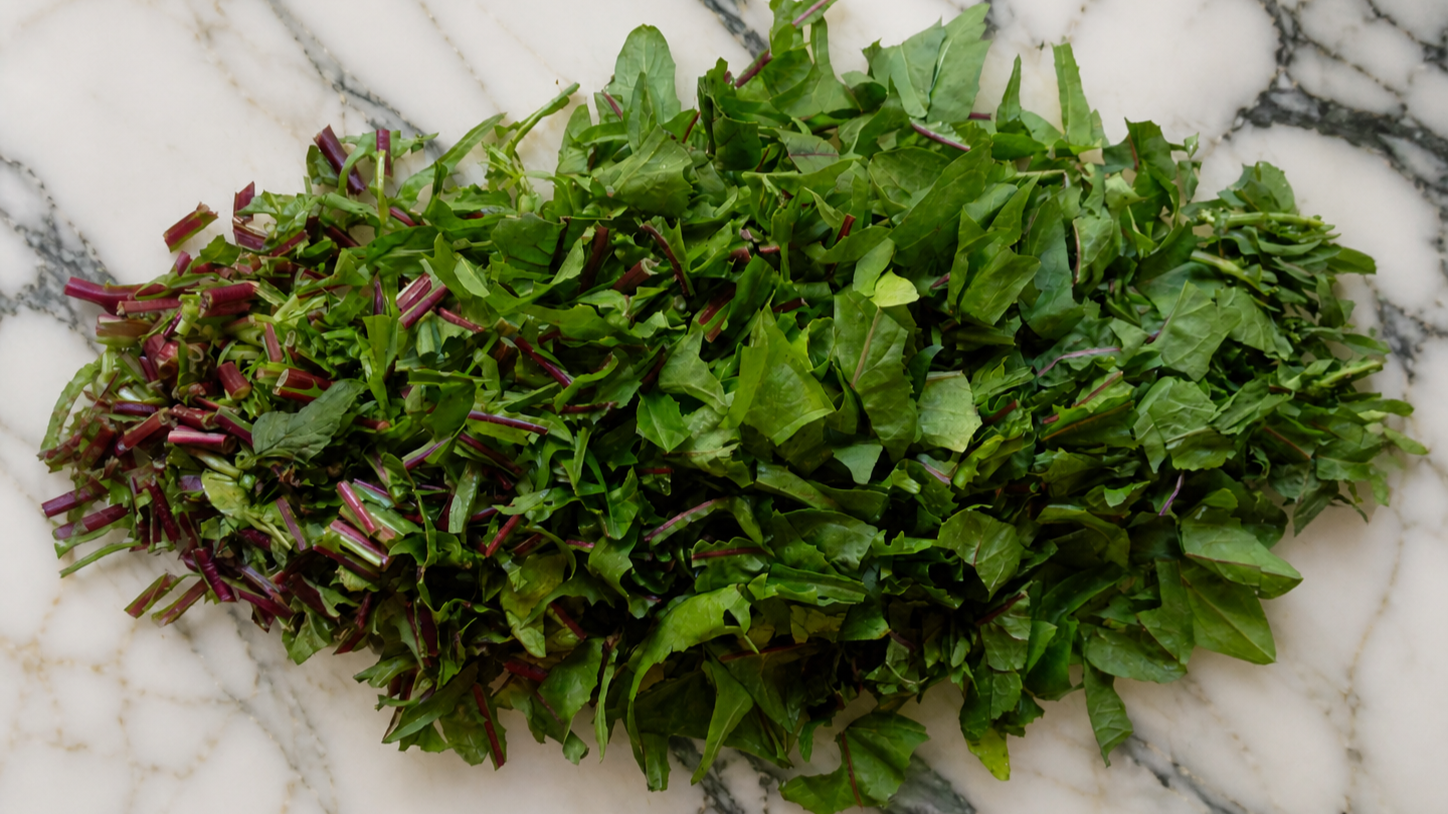
Image of dandelion greens.
Every month, women lose blood. Every month, iron leaves the body with it. And yet iron deficiency remains one of the most underdiagnosed and underdiscussed nutritional issues in women of reproductive age.
Dandelion greens contain iron — the mineral your body uses to produce red blood cells and carry oxygen through the blood. While it's a non-heme iron source (meaning it's plant-based and slightly less bioavailable than iron from animal sources), it's still a meaningful contributor, particularly when paired with Vitamin C — which dandelion also contains in significant amounts. Vitamin C enhances non-heme iron absorption, so the plant essentially comes with its own absorption booster built in.
Dandelion leaves are also recommended as a nutritional supplement specifically for pregnant women, given their rich vitamin and mineral profile. This makes sense: pregnancy increases iron demand substantially, and dandelion provides iron, folate-supporting nutrients, and calcium without any of the synthetic additives found in most prenatal supplements.
For women not currently pregnant but still cycling monthly, incorporating dandelion into the diet — as greens, tea, or tincture — is one of the more practical ways to support iron levels through food.
References: EBSCO Research Starters — Nutrition-and-You
Gut Health: The Prebiotic Nobody Is Talking About
Your gut microbiome influences essentially everything — digestion, immune function, mood, skin clarity, hormonal metabolism. The research on this is extensive and growing. Studies show that how you feed your microbiome matters.
Dandelion root contains inulin, a naturally occurring prebiotic fiber that feeds the beneficial bacteria in your gut. Inulin has been shown to support the absorption of calcium and magnesium — both minerals that are particularly important for women's bone health, sleep quality, and nervous system regulation. For women navigating perimenopause, where mineral metabolism becomes increasingly critical, this is meaningful.
Beyond inulin, the bitterness of dandelion leaves stimulates bile production, supporting fat digestion and liver detoxification. 2024 research on dandelion demonstrated reduced liver fat accumulation in animal models, pointing toward potential benefits for metabolic health. Many integrative health providers note improved gut comfort in people who consume dandelion consistently.
For women experiencing bloating, sluggish digestion, or skin breakouts that seem hormonally tied — the liver-gut-skin connection is real, and dandelion root is one of the more well-documented botanical supports for that system.
References: MyOva — Science Societies
Hormonal Health: Phytoestrogens and the Cycle
This is where it gets interesting for women specifically.
Dandelion leaf contains phytoestrogens — plant compounds with estrogen-like properties that interact gently with the body's hormonal receptors. Phytoestrogens are not the same as synthetic estrogen; they are significantly weaker and work differently. But their presence in dandelion is relevant for women dealing with cycle irregularities, PMS, perimenopause, or symptoms tied to estrogen fluctuation.
Preliminary evidence suggests dandelion leaf may help balance hormone levels, including relief from menstrual cramps. Whether this is a direct hormonal effect or a downstream result of the liver's improved ability to clear excess estrogen (which the liver processes and eliminates) is still being studied. Either way, the mechanism is logical and the anecdotal evidence is consistent.
A 2024 randomized interventional trial enrolled 120 premenopausal women with obesity to study dandelion supplementation's effects on body weight, fat mass, lipid profile, and inflammatory markers — a formal clinical investigation targeting women specifically. Results are forthcoming, but the research attention itself signals the direction the science is moving.
References: The White Star Ranch — ClinicalTrials.gov NCT06625736
Skin, Antioxidants, and the Aging Question
Antioxidants neutralize free radicals — the oxidative stress that accelerates cellular aging. Dandelion contains several of them: beta-carotene (converted to Vitamin A in the body), Vitamin C, luteolin, chicoric acid, and chlorogenic acid.
The skin connection is direct. A 2022 study found that a fermented broth of dandelion extract prevented skin damage when applied before or after UVB radiation exposure. Earlier research indicated that dandelion extract may reduce skin inflammation and irritation while increasing hydration and collagen production. Separately, research shows dandelion possesses antimicrobial properties that can help block bacterial growth — relevant for acne-prone skin.
Dandelion root, in particular, is described by integrative practitioners as "a great ally for the liver, known to help clear up acne or other skin disruptions with the root cause being a stagnant liver." The root tea has a stronger detoxifying action on the liver than the leaves. The liver-skin axis is well-documented: when the liver is processing excess hormones, toxins, and waste efficiently, the skin tends to reflect that.
The antioxidant density in the flowers is especially notable — the aerial flowering parts contain polyphenol concentrations roughly 115 times higher than what's found in the roots alone. If you're making dandelion tea and not using the flowers, you're leaving the most potent antioxidant fraction behind.
References: Healthline — Cleveland Clinic — Dr. Axe
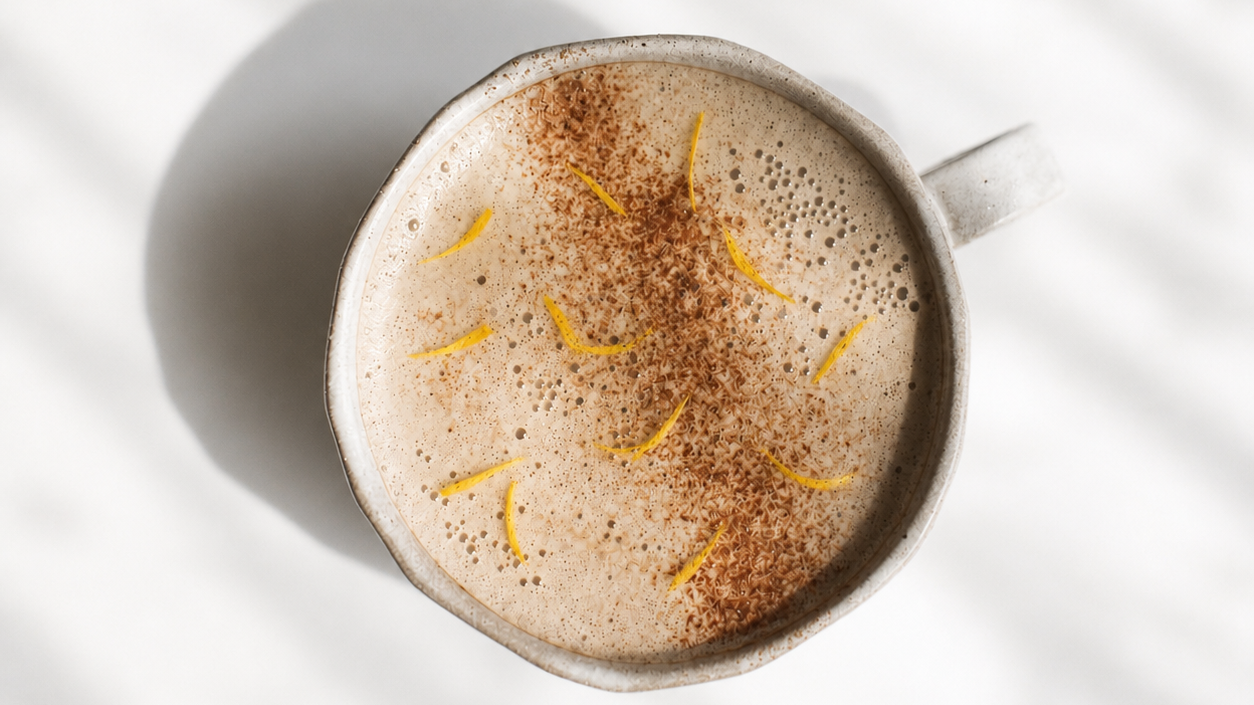
Image of a dandelion root latte
How to Actually Use Dandelion
Knowing something is nutritionally excellent doesn't help you if you can't integrate it. Here's the practical layer:
Dandelion greens can be added raw to salads (they have a pleasantly bitter, peppery flavor), blended into smoothies, sautéed with garlic and olive oil as a side, or folded into pesto. Young leaves are milder; older leaves are more bitter. Both are nutritionally valid.
Dandelion root tea is widely available and is the most accessible entry point. Look for organic, whole-root preparations over low-quality dust bags. The root tea has stronger liver and digestive benefits. It's naturally caffeine-free.
Dandelion tinctures and supplements are available in most health food stores and online. Tinctures provide a concentrated extract; capsules offer a standardized dose. If you're using it therapeutically — for cycle support, bloating, or liver detox — a tincture or root extract is more targeted than the leaf.
Cooked vs. raw: Cooking decreases nitrate levels, which can be a consideration for those consuming dandelion in large amounts. Boiling or sautéing is recommended for higher-volume consumption. Raw is fine in smaller amounts — salads, smoothies, tea.
One practical note: dandelion is contraindicated for people with gallbladder disease or bile duct obstruction. If you're on diuretics, blood thinners, or medications for diabetes or liver conditions, check with your doctor before adding therapeutic amounts. In fact, check it with your doctor regardless. Dandelion is a real botanical with real effects — which is exactly why it works.
TLDR
Dandelion is not a trend. It's not a supplement industry invention. It's a plant that has been used medicinally for centuries and is now being validated by modern research in ways that are directly relevant to women's health — bones, blood, gut, hormones, skin, liver.
The reason it doesn't have a celebrity spokesperson or a $40 price tag is simply that it grows in every yard and is not owned by anyone.
This article is intended for informational purposes only and does not constitute medical advice. Consult a qualified healthcare professional before making changes to your diet or supplement routine.
Citations
Healthline — What Are the Benefits of Dandelion? (February 2026)
WebMD — Is Dandelion Tea Good for You? (Reviewed October 2024)
Science Societies / Agrosystems, Geosciences & Environment — Basso et al. (2024)
ClinicalTrials.gov — Anti-Obesity Effects of Dandelion in Premenopausal Women (NCT06625736, 2024)
EBSCO Research Starters — Dandelion's Therapeutic Uses (2024)
MyOva — The Comprehensive Guide to Dandelion Root Tea Benefits for Women (June 2024)
Nutrition-and-You — Dandelion Herb Nutrition Facts and Health Benefits
Dr. Axe — Dandelion Root Benefits, How to Use and Side Effects (November 2024)
Food4HealthyBones — Why These Weeds Make Your Bones Strong (May 2025)
The White Star Ranch — Dandelions: Pesky Weeds, or Medicine? (January 2024)
Save Our Bones — Why You Should Add Dandelions to Your Bone-Healthy Diet (June 2023)
